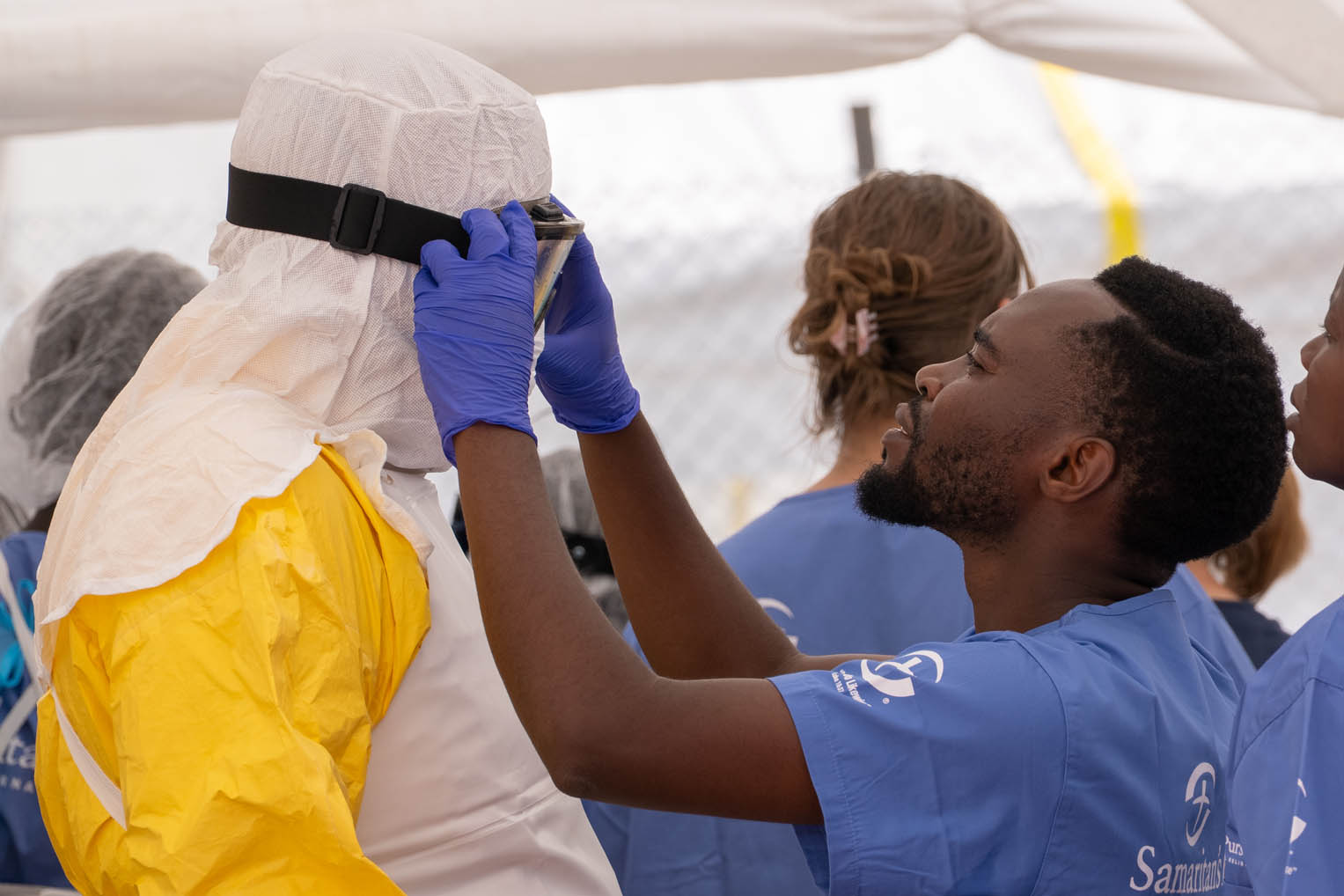
Congolese are receiving live-saving care at our two Ebola Treatment Centres as Samaritan's Purse teams work to treat the sick and slow the spread of the deadly virus.
- Medical teams have received nearly 500 patients, discharging more than 300 of them. Our Bunia site was selected for clinical trials of treatments for the Bundibugyo strain.
- Samaritan's Purse prevention and containment messaging has reached more than 350,000 Congolese and our teams have installed over 160 handwashing stations as part of this campaign.
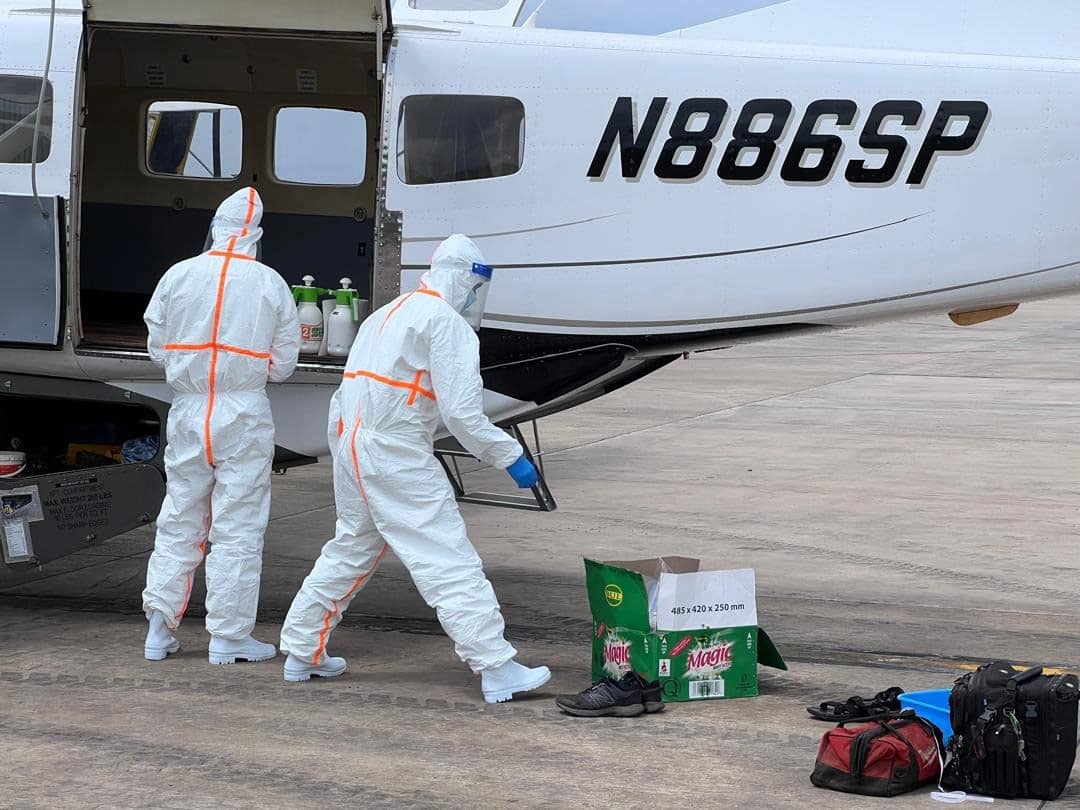
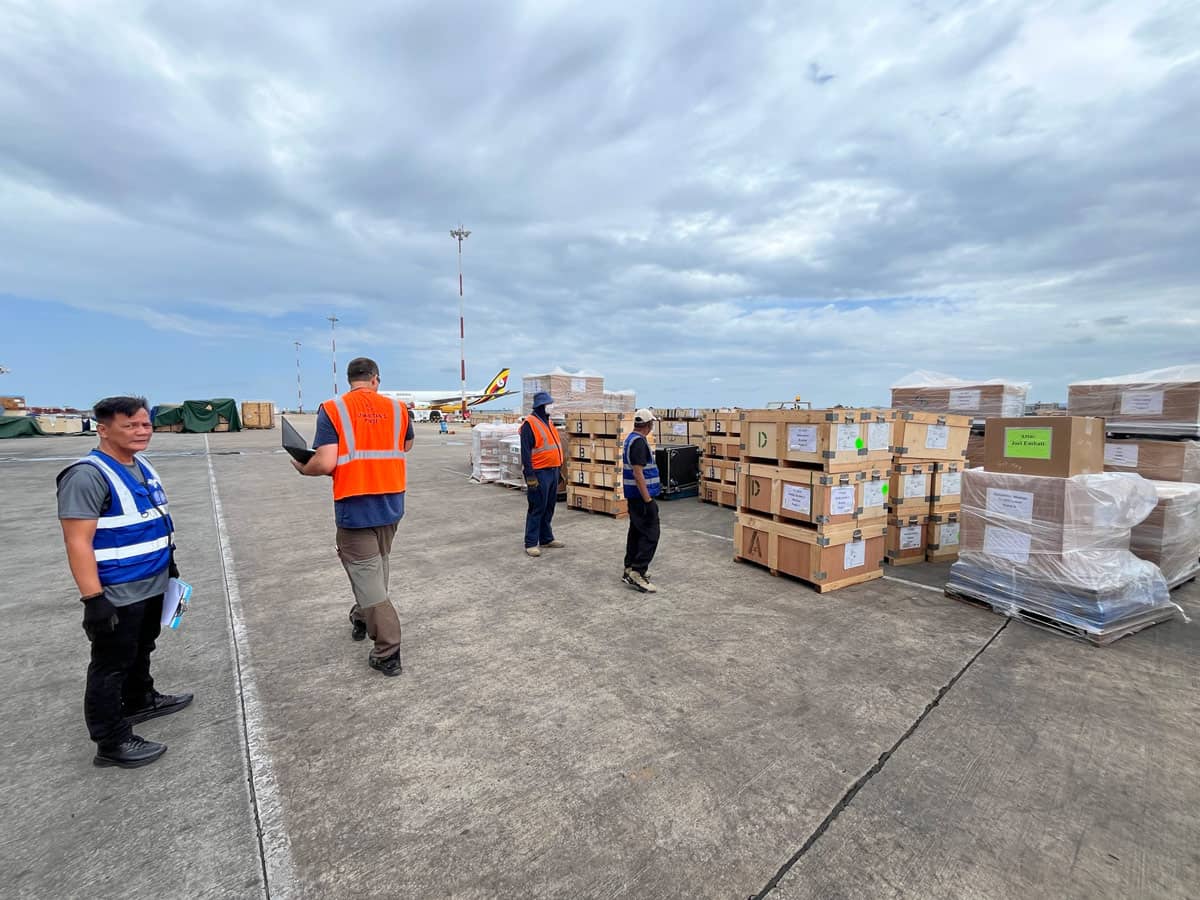
- Two airlifts of our 767 brought protective gear, medical equipment, and other supplies, with dozens of smaller aircraft delivering the materials in country.
More than 60 Disaster Assistance Response Team (DART) members from Samaritan's Purse are on the ground in eastern Democratic Republic of the Congo coordinating with the Ministry of Health across nearly two dozen health zones as reported cases of Ebola are on the rise.
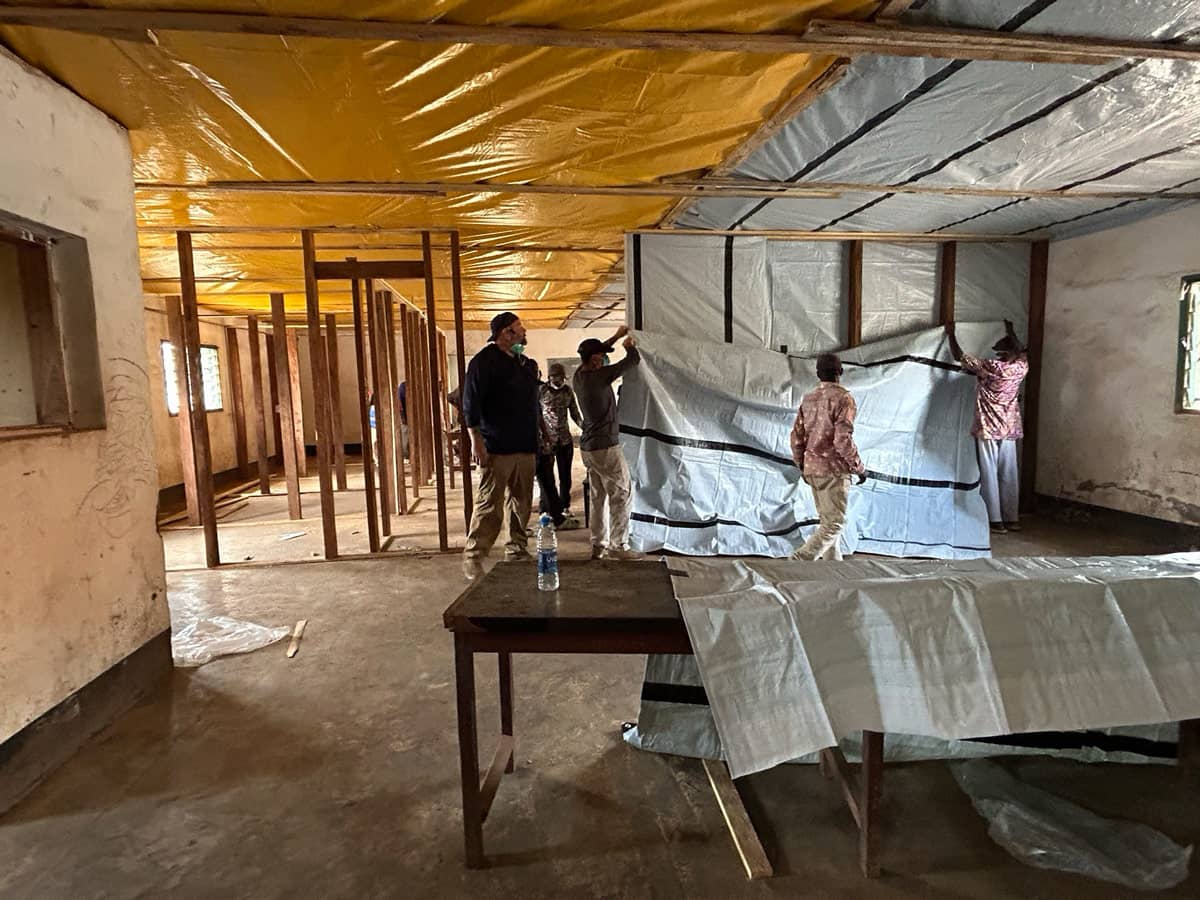
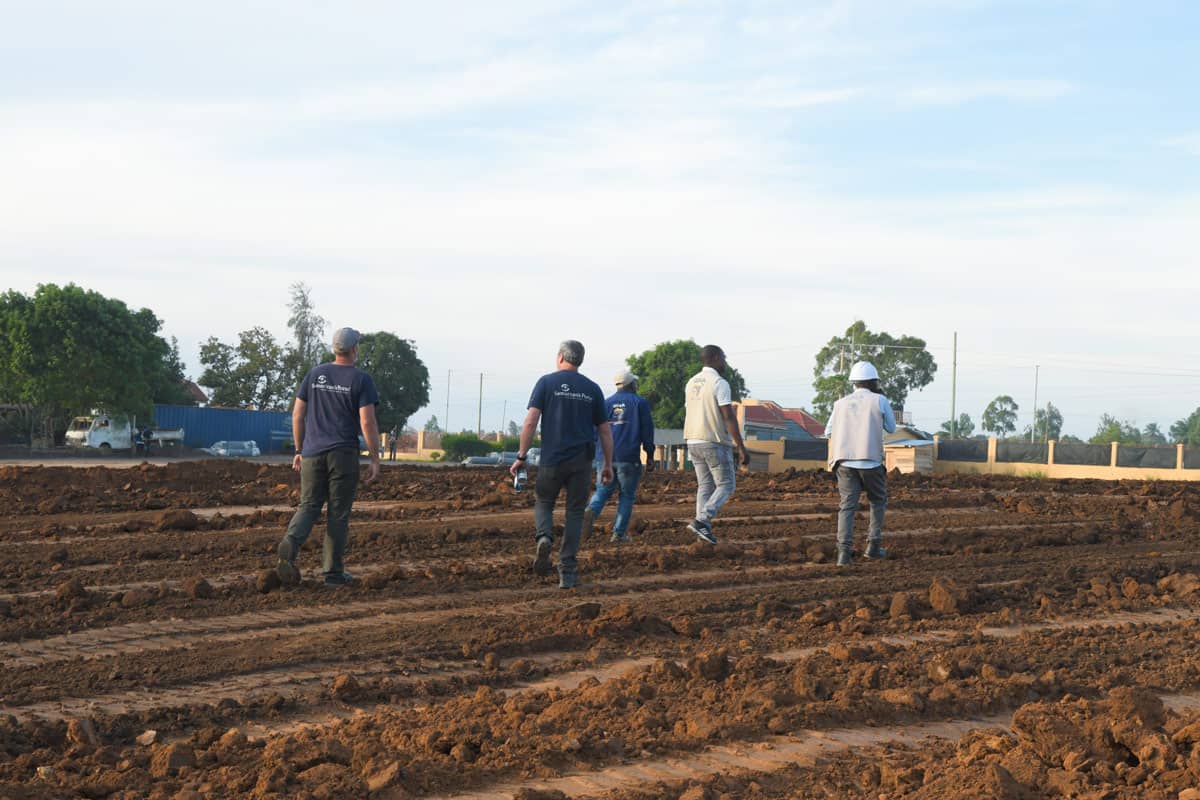
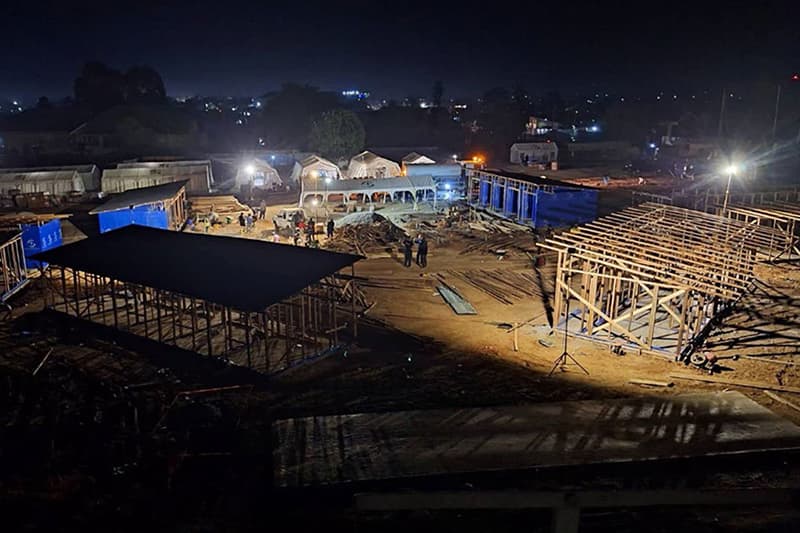
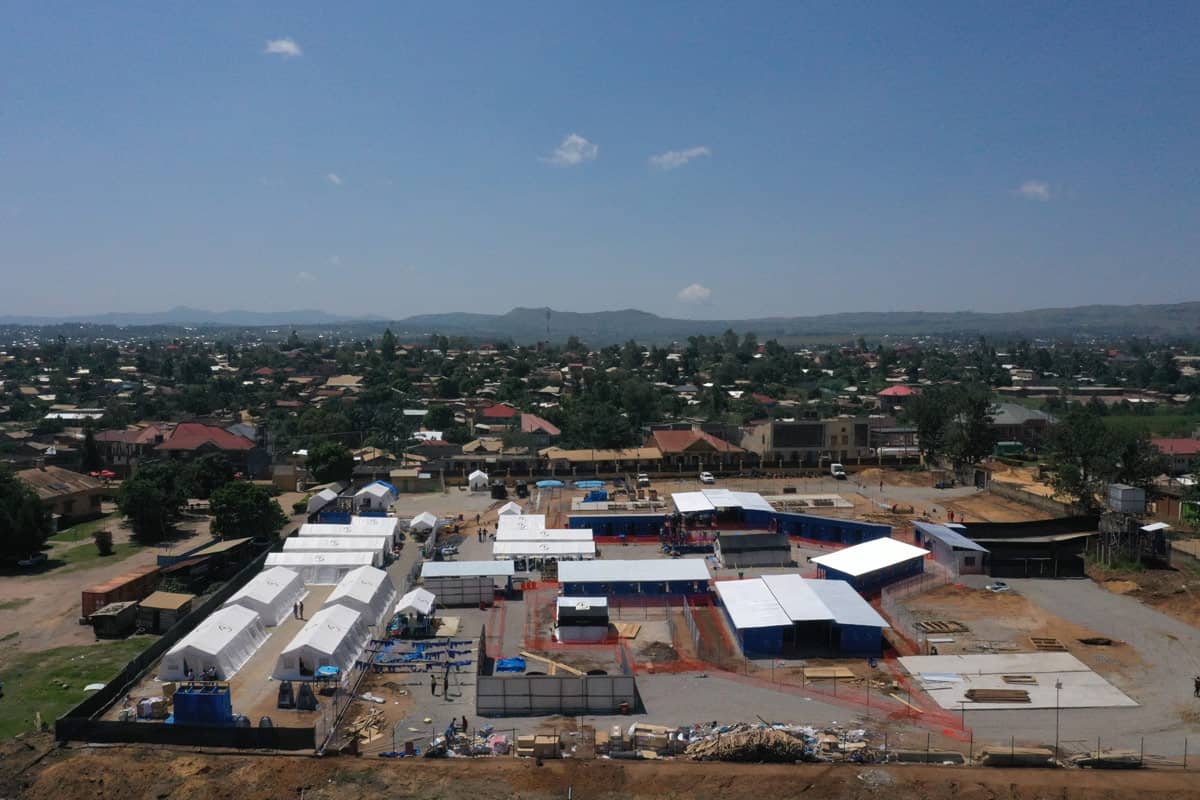
We opened two Ebola Treatment Centres (ETC) in mid-June: one 60-bed facility in Bunia, the capital of Ituri Province, and a 31-bed unit at a long-time partner mission hospital in Nyankunde. Both are at or near capacity. Additional isolation tents were recently installed to provide preliminary triage and treatment of patients awaiting admission to the ETCs.
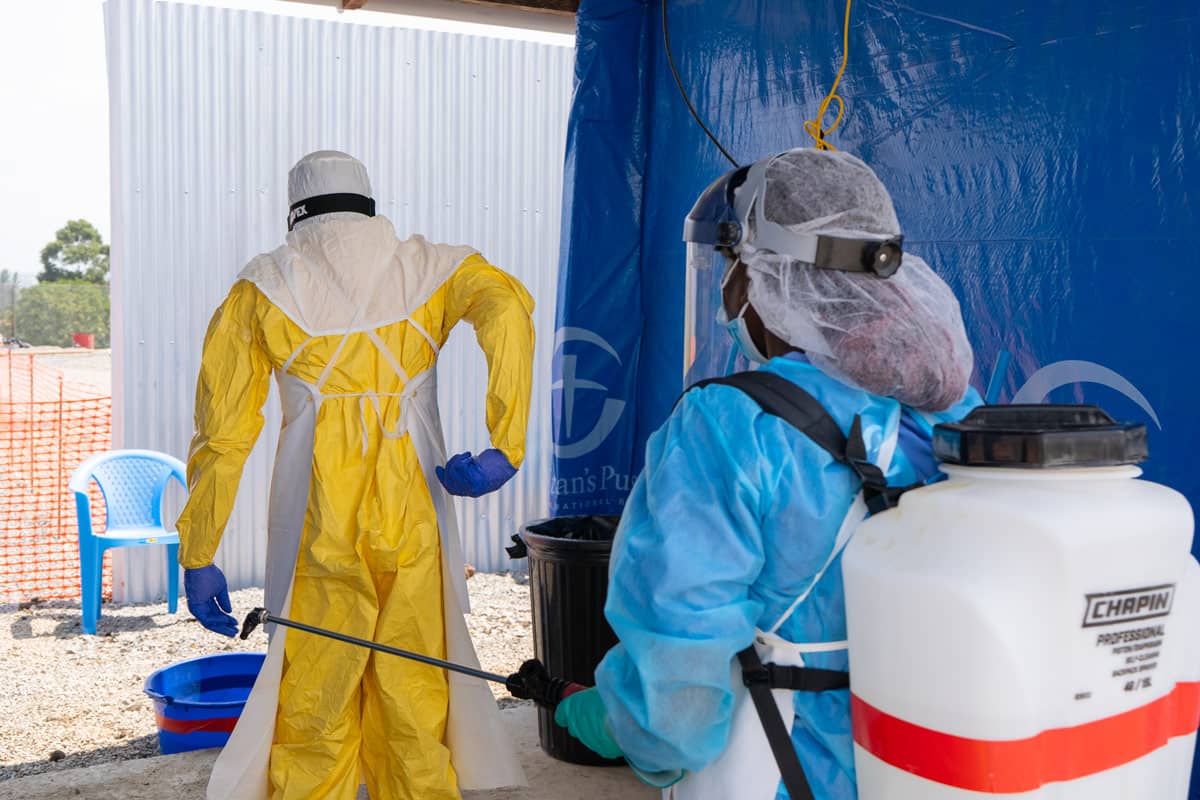
Samaritan's Purse and local medical personnel in personal protective equipment treat a patient at our Ebola Treatment Centre in Bunia.

Through an education campaign, we are actively reaching thousands of people with information on disease risks and prevention. Our water, sanitation, and hygiene teams have established handwashing stations and instructed many residents in proper sanitation and hygiene to prevent disease transmission. This is absolutely critical in the effort to stop Ebola. Samaritan's Purse DART members continue serving in multiple communities. There are more than 3,800 confirmed cases of the disease in the region.
We will continue to assist local mission hospitals and communities with establishing protocols for treatment of infected patients, prevention of person-to-person transmission, and controlling the spread. The treatment center, to be operated by Samaritan's Purse, is specifically adapted to treat Ebola patients.
Our longstanding country office is based in Bunia, the capital of hard-hit Ituri Province. Staff members there are working in Jesus' Name to provide education in disease prevention; water, sanitation, and hygiene projects; and other programming to stop spread of the virus.

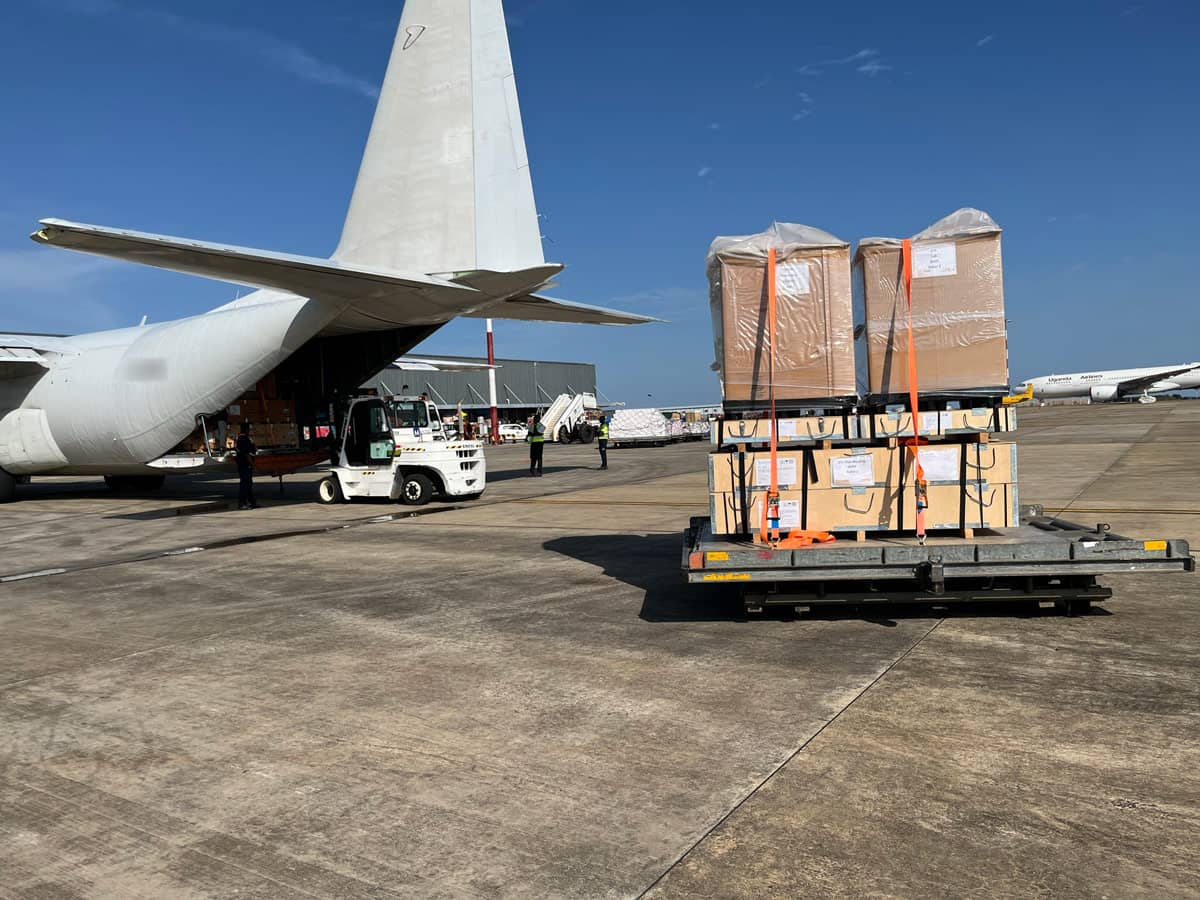
Teams offload supplies from our 767 as our Ebola response continues to build in DRC.
"As this deadly Ebola virus spreads so does people's fear and uncertainty," Franklin Graham said. "They are in desperate need of emergency medical relief and supplies to help prevent the spread of this outbreak. That's why Samaritan's Purse is airlifting supplies to the people of the Democratic Republic of the Congo."
Our first 767 flight, on May 24, transported tens of thousands of pounds of medical supplies, protective equipment, and personnel to the region, all carried into the DRC on dozens of flights of Samaritan’s Purse planes, chartered C-130s, and other aircraft. Our second 767 flight departed Greensboro, North Carolina, on June 20 and delivered tonnes of personal protective equipment, hygiene kits, and more. With more than 112,000 pounds of relief aboard, this is our largest load carried on our 767.
Our organisation has a long history of responding to infectious diseases, including Ebola, cholera, diphtheria, and COVID-19.
During the height of the Ebola outbreak in Liberia in 2014, Samaritan's Purse opened an Ebola Treatment Center—giving hands-on patient care—and combatted infection rates by providing hygiene training and prevention education across affected communities. Through a massive public education campaign, which included thousands of church leaders, Samaritan's Purse provided potentially life-saving information to more than 1.6 million people.
“Samaritan's Purse has been on the frontlines of fighting Ebola for more than a decade, and we aren't going to stop now. We are going to do everything we can to help save lives,” said Franklin Graham, president of Samaritan's Purse. “We want people to know that God loves them, and they are not alone.”

Just a few years later, in 2018, Samaritan's Purse established an Ebola Treatment Centre in the Democratic Republic of the Congo, caring for more than 600 patients and continuing to educate communities on best practises to help stop the spread of the disease.
Please be in prayer for our country office team and our Disaster Assistance Response Team as we respond to this 2026 outbreak. Pray for all the people affected in central and eastern Africa and for an end to the spread of this virus.
Of Special Note: Dr. Peter Stafford, a former post-resident with Samaritan’s Purse, fell ill and tested positive for Ebola at the outset of the outbreak while serving in Nyankunde. He was airlifted to Germany where he received excellent care. He is now recovering and has returned to the United States with his family. Praise God!
Support Ebola Response
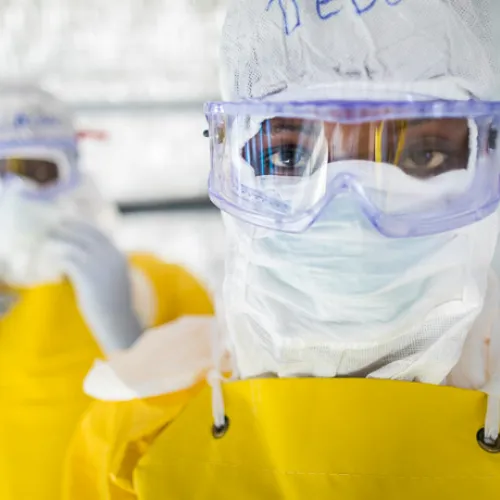
£10 can help get urgently needed PPE into the hands of those containing the outbreak on the frontlines.
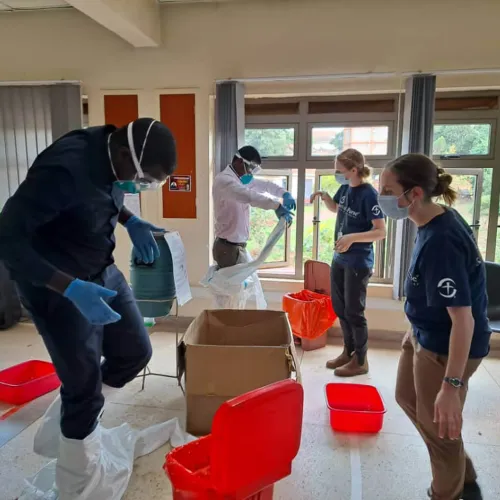
£50 could provide clean water and sanitation stations to help stop the spread of this deadly virus.
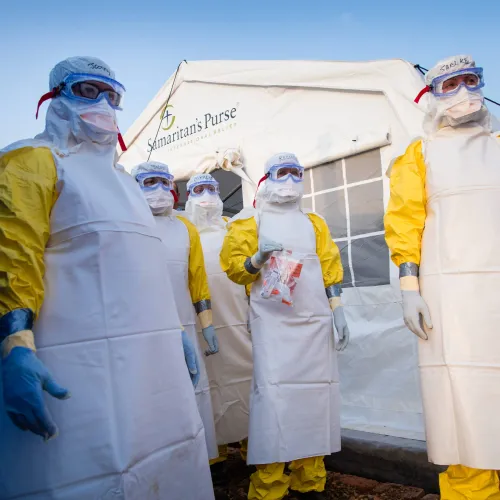
£100 supports our Ebola Treatment Centre in giving hands-on care for infected men, women, and children.